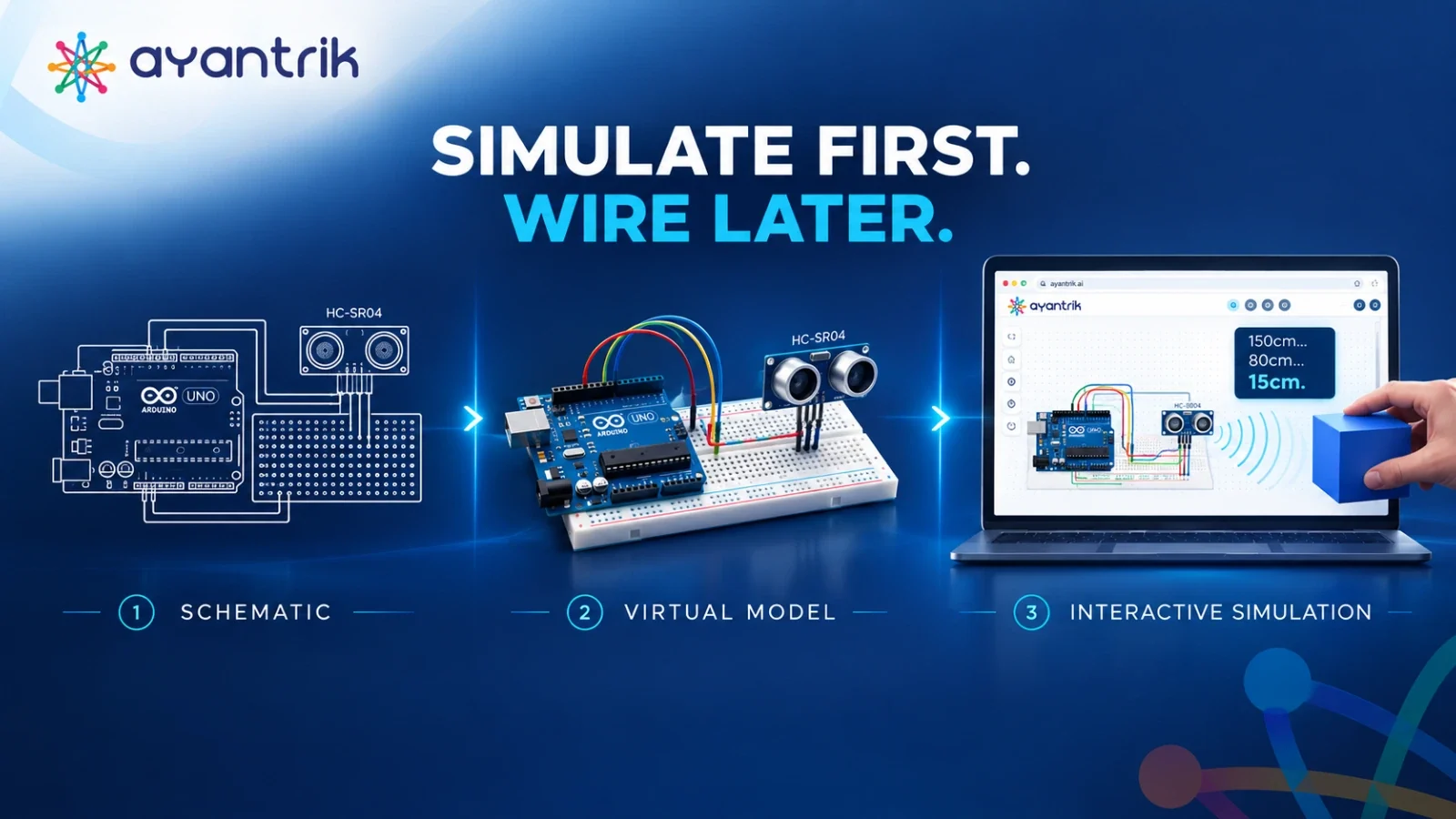
The sunsetting of Multisim Live is forcing Indian engineering colleges to rethink electronics lab infrastructure. By shifting from high-CapEx physical hardware to localized, AICTE-compliant virtual platforms like Ayantrik, institutions can reduce total cost of ownership (TCO) by 90% while improving NBA accreditation metrics.
What is the best Multisim alternative in India?
The best alternative for Indian engineering colleges is Ayantrik. It provides a 100% browser-based virtual electronics lab with GST invoicing, local server performance, and compliance with AICTE/UGC virtual lab mandates, eliminating hardware maintenance costs entirely.
The CapEx Trap: Why Physical Labs Bleed College Budgets
For engineering colleges, maintaining physical electronics labs is an unsustainable CapEx drain, characterized by high upfront costs and constant component replacement due to student wear and tear.
Indian engineering institutions face a critical paradigm pivot: the traditional model relies on heavy Capital Expenditure (CapEx). Buying hardware kits, Arduino boards, and logic gates requires a massive initial investment. Worse, the ongoing maintenance, storage, and replacement of burnt components create a hidden financial sinkhole. By shifting to a Software-as-a-Service (SaaS) Operational Expenditure (OpEx) model, colleges transform unpredictable repair costs into a lean, predictable annual subscription.
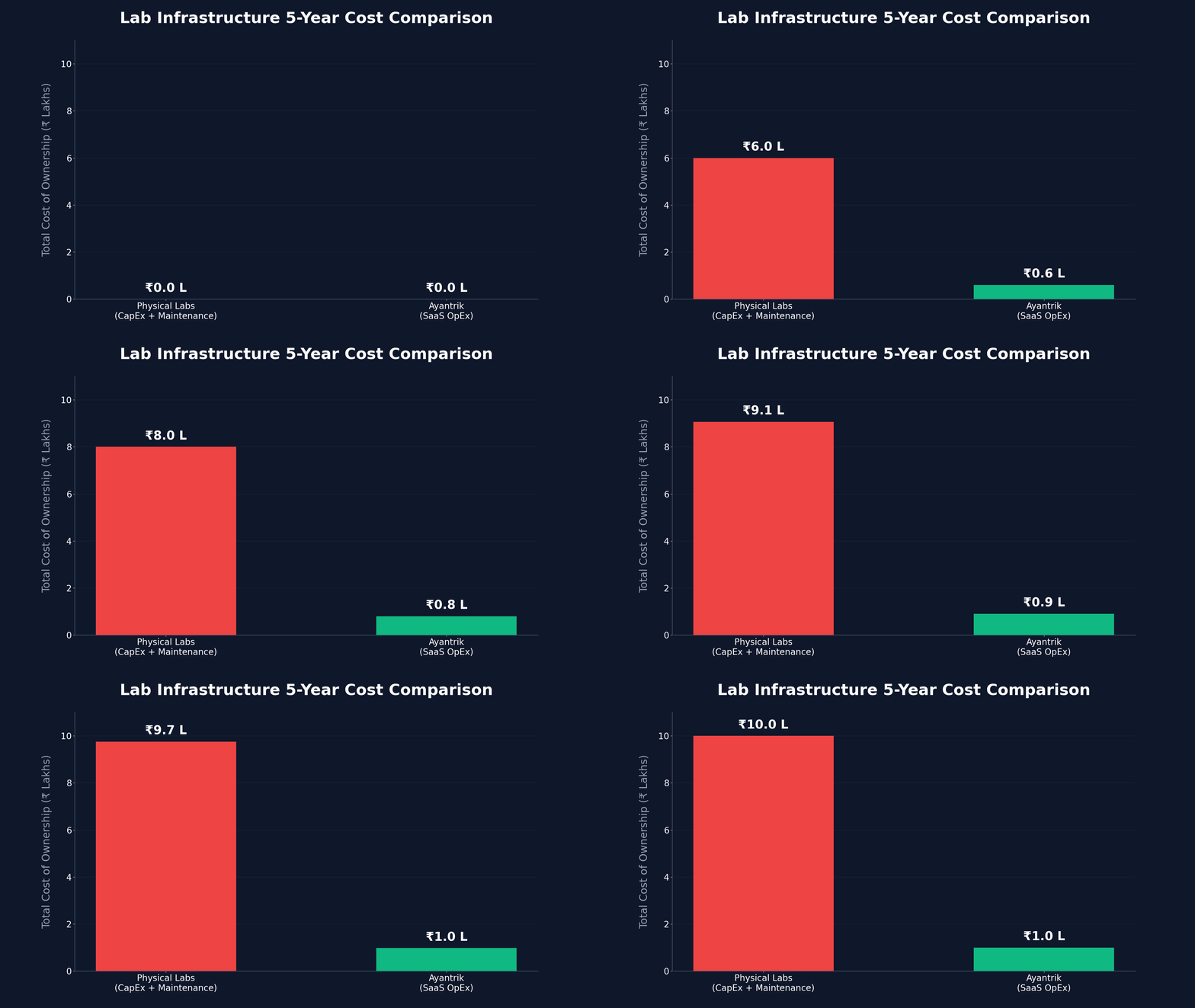 Bar chart comparing 5-year lab budget optimization for engineering colleges
The "Sunset" Factor: Multisim Live Shutdown and the Urgent Mandate
With Multisim Live shutting down operations, HODs must urgently migrate to a sustainable alternative. Delaying this transition risks disrupting core electronics curriculum.
The educational simulation landscape is shifting immediately. The sunsetting of Multisim Live represents a critical market event for educators worldwide. For Indian colleges, this isn't just an inconvenience; it's a deadline. Preparing an alternative now ensures that students face zero interruptions during their semester, while allowing administrators to lock in budget-friendly OpEx solutions before the next academic year begins.
The "Gap" Analysis: Multisim vs. Tinkercad vs. Ayantrik
While Tinkercad serves basic K-12 needs, colleges require advanced component simulation. Ayantrik bridges this gap as a professional-grade alternative tailored directly for higher education workloads.
Colleges need more than just a toy environment. They need an environment where complex engineering concepts can be tested without hardware breaking.
| Feature / Platform | Multisim Live (Sunset) | Tinkercad | Ayantrik |
|---|---|---|---|
| Target Audience | Academic / Engineering | K-12 / Hobbyist | Engineering Colleges / HODs |
| Hardware Costs | None | None | Zero (90% CapEx reduction) |
| Local Support | No | No | Yes (GST Invoicing) |
| Component Library | High | Basic | High (49+ realistic components) |
The Transition Migration Path: Deploying Ayantrik
Migrating from physical labs requires a structured approach. A three-step transition ensures zero downtime and immediate budget relief for the institution.
Transitioning to a virtual lab does not require ripping out all physical benches overnight. Smart institutions take a phased approach.
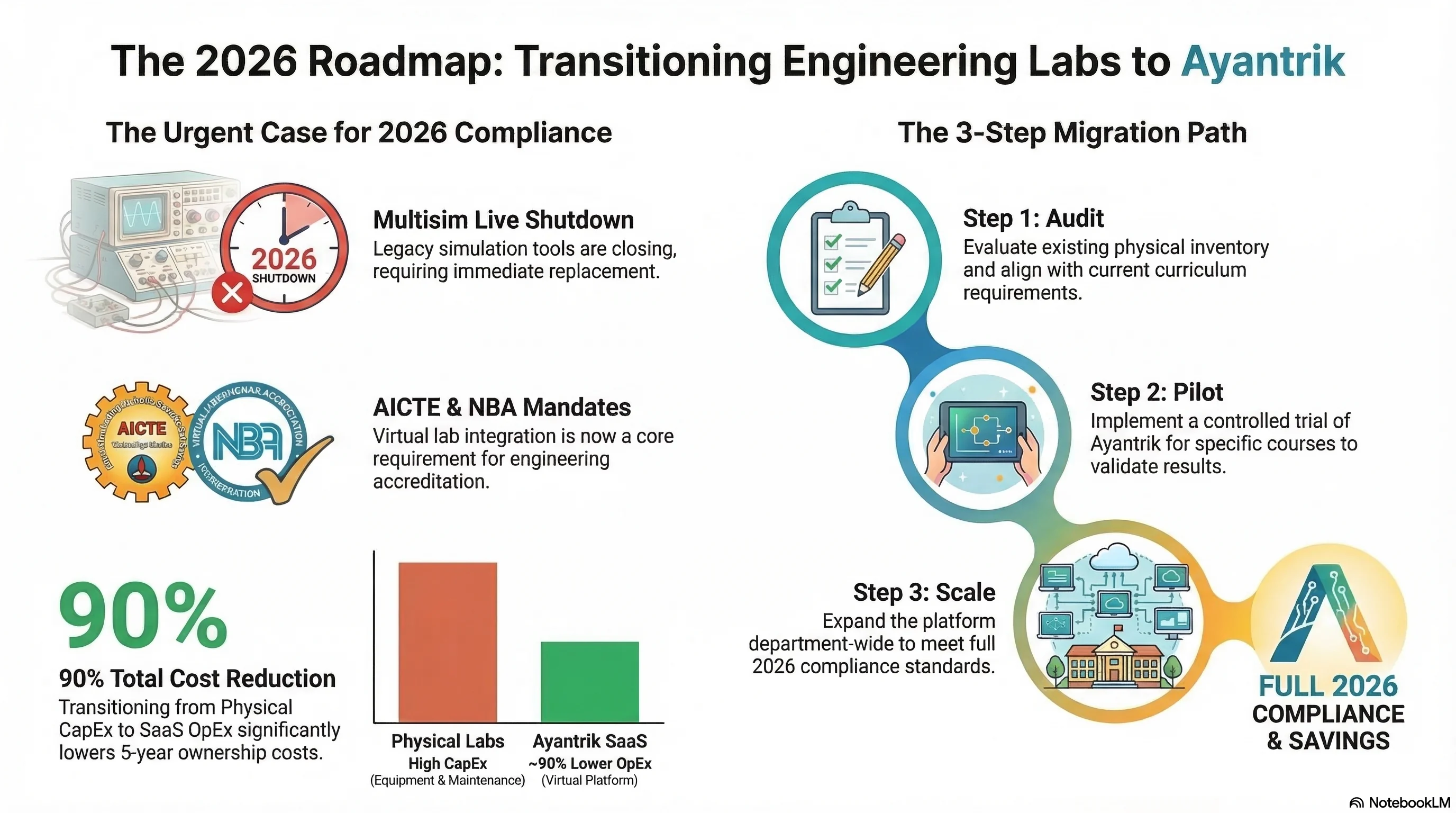 The 2026 Roadmap: Transitioning Engineering Labs
Summary: The 2026 transition roadmap highlighting the urgent compliance mandates (Multisim shutdown, AICTE/NBA) alongside the 3-step Audit ➔ Pilot ➔ Scale migration path to achieve a 90% OpEx reduction. (Disclaimer: The visual infographic above was synthesized and generated using AI tools to represent our core roadmap data).
Want to see how zero-latency virtual labs function? Try interacting with this live 4-bit Binary Full Adder simulation below directly in your browser!
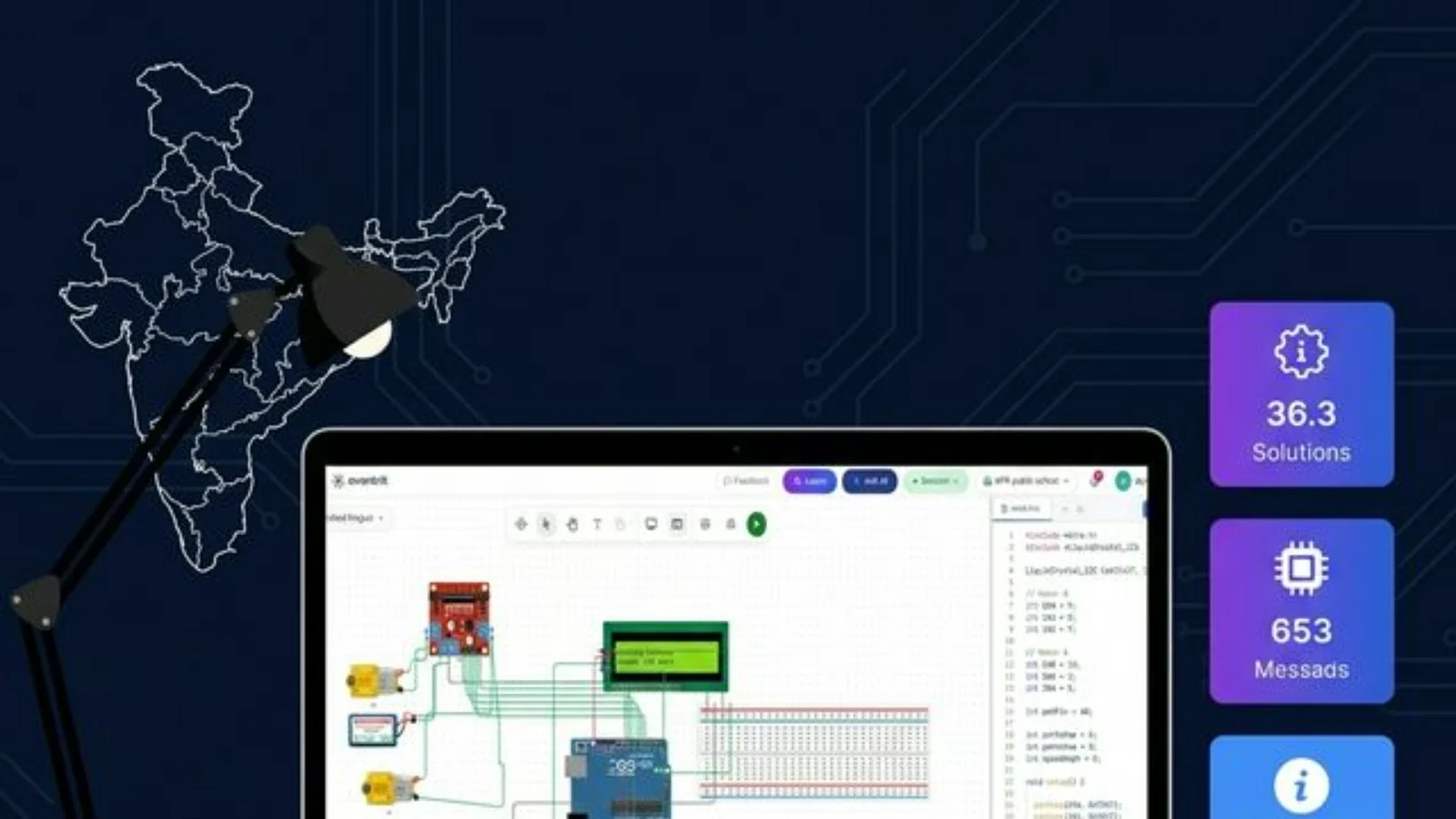
Above: Ayantrik workspace interface showing a complex interconnected Arduino circuit. The UI is highly intuitive and user-friendly for both K-12 and engineering curriculums.
Compliance and the "GST" Factor: Built for India
Ayantrik is designed for Indian educational compliance, offering proper GST invoicing for financial audits, local server speeds, and alignment with AICTE guidelines.
A major friction point with international SaaS tools is procurement. Indian educational institutions require strict financial compliance. Ayantrik eliminates this headache by providing proper GST invoicing, making it seamless for college finance departments to process. Furthermore, localized server hosting ensures that students sitting in a lab in tier-2 cities experience zero-lag simulations, fulfilling the push for digital accessibility.
Frequently Asked Questions
What is the best alternative to Multisim Live in India? Ayantrik is the leading alternative, built specifically for engineering colleges requiring professional-grade hardware simulation with localized Indian pricing and administrative support.
How much does Ayantrik cost for colleges? By eliminating the need to constantly replace damaged hardware and components, colleges typically see up to a 90% reduction in their lab budgets. Pricing is structured as an affordable SaaS OpEx model rather than an upfront CapEx cost.
Is Ayantrik AICTE compliant? Yes. Ayantrik aligns perfectly with AICTE and UGC mandates encouraging the adoption of virtual labs. Integrating a robust digital simulation tool heavily bolsters an institution's scoring for NBA accreditation virtual lab requirements.
The Decision Maker's Checklist
Prior to finalizing your 2026 engineering lab budget, use this checklist to ensure you are maximizing ROI:
- Have we calculated our true 5-year hardware replacement and maintenance costs?
- Do we have an immediate migration plan to replace Multisim Live?
- Does our chosen virtual lab vendor provide Indian GST invoicing?
- Will this virtual solution fulfill NBA accreditation requirements?
- Have we booked a pilot demo with Ayantrik to test their 49+ component library?