ESP32 vs Arduino: Which Microcontroller is Better for Modern Projects?
| Project Type | ESP32 vs Arduino Comparison |
|---|---|
| Category | Embedded Systems |
| Main Boards | ESP32 & Arduino UNO |
| Focus Area | IoT and Smart Electronics |
| Difficulty Level | Beginner to Intermediate |
| Best Use Case | Smart Automation & Wireless Systems |
Introduction
Modern electronics projects now require:
- wireless communication
- real-time monitoring
- cloud connectivity
- faster processing
Traditional microcontrollers like Arduino UNO are still useful for learning and simple automation, but modern IoT systems demand more powerful hardware.
ESP32 was designed specifically for connected systems and smart automation projects. Unlike Arduino UNO, ESP32 includes:
- built-in Wi-Fi
- Bluetooth
- dual-core processing
- higher RAM
- better performance
This makes ESP32 suitable for:
- IoT projects
- smart home systems
- wireless robotics
- cloud-based monitoring
- AI electronics
In this blog, we compare ESP32 and Arduino UNO based on:
- performance
- connectivity
- processing power
- real-world applications
What is Arduino UNO?
Arduino UNO is an open-source microcontroller board based on the ATmega328P chip.
It became popular because of:
- simple programming
- beginner-friendly setup
- huge community support
- easy hardware interfacing
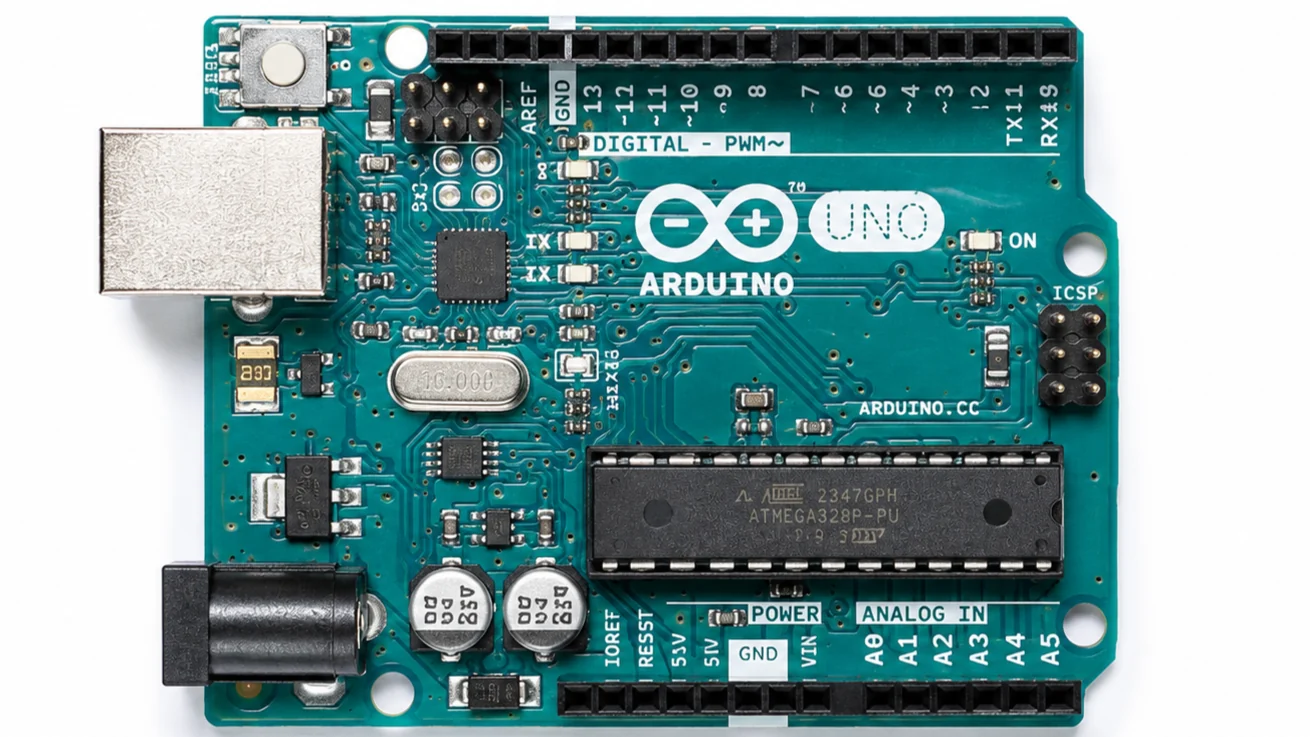 ef3fc938 8329 4bff ba1b f45eb6b80dbc
Arduino is commonly used in:
- sensor projects
- robotics
- LED control systems
- automation basics
- educational electronics
However, Arduino UNO has limited processing capability and does not include built-in wireless communication.
What is ESP32?
ESP32 is a microcontroller developed by Espressif Systems for IoT and wireless embedded systems.
 ESP32 pin configuration and GPIO architecture
Unlike Arduino UNO, ESP32 provides:
- built-in Wi-Fi
- Bluetooth support
- dual-core processor
- higher clock speed
- more GPIO pins
- larger memory capacity
ESP32 is widely used in:
- smart home automation
- IoT monitoring systems
- wireless sensors
- AI hardware
- remote control systems
Hardware Comparison
| Feature | Arduino UNO | ESP32 |
|---|---|---|
| Clock Speed | 16 MHz | Up to 240 MHz |
| Processor | Single Core | Dual Core |
| Wi-Fi | External Module Required | Built-In |
| Bluetooth | Not Available | Built-In |
| RAM | 2 KB | ~520 KB |
| GPIO Pins | Limited | More Available |
| IoT Support | Basic | Advanced |
| Power Efficiency | Standard | Better Optimization |
Why ESP32 is Better for IoT Projects
Modern IoT systems require constant internet communication between:
- sensors
- cloud servers
- mobile apps
- automation systems
Arduino UNO requires external modules like:
- ESP8266 Wi-Fi Module
- HC-05 Bluetooth Module
This increases:
- circuit complexity
- wiring overhead
- power usage
ESP32 already integrates:
- Wi-Fi
- Bluetooth
- networking stack
directly into the microcontroller.
This simplifies hardware design significantly.
Processing Power Difference
ESP32 operates at a much higher clock speed compared to Arduino UNO.
| Board | Clock Speed |
|---|---|
| Arduino UNO | 16 MHz |
| ESP32 | Up to 240 MHz |
Higher processing speed allows ESP32 to:
- handle multiple sensors
- process data faster
- run web servers
- support real-time applications
Arduino UNO performs well for lightweight tasks but struggles with advanced multitasking workloads.
Real-World Applications
Arduino UNO Applications
Arduino UNO is commonly used in:
- basic robotics
- LED projects
- beginner automation
- educational experiments
Its simple architecture makes it excellent for learning embedded systems.
ESP32 Applications
ESP32 is commonly used in:
- smart home systems
- IoT devices
- AI electronics
- wireless monitoring
- cloud automation
- industrial control systems
Its built-in networking capabilities make it ideal for connected systems.
Why Beginners Still Start with Arduino
Even though ESP32 is more powerful, Arduino UNO remains easier for beginners because:
- simpler architecture
- easier debugging
- massive tutorial ecosystem
- beginner-friendly libraries
Many students start with Arduino before moving to ESP32 for larger projects.
Using ESP32 in Ayantrik Lab
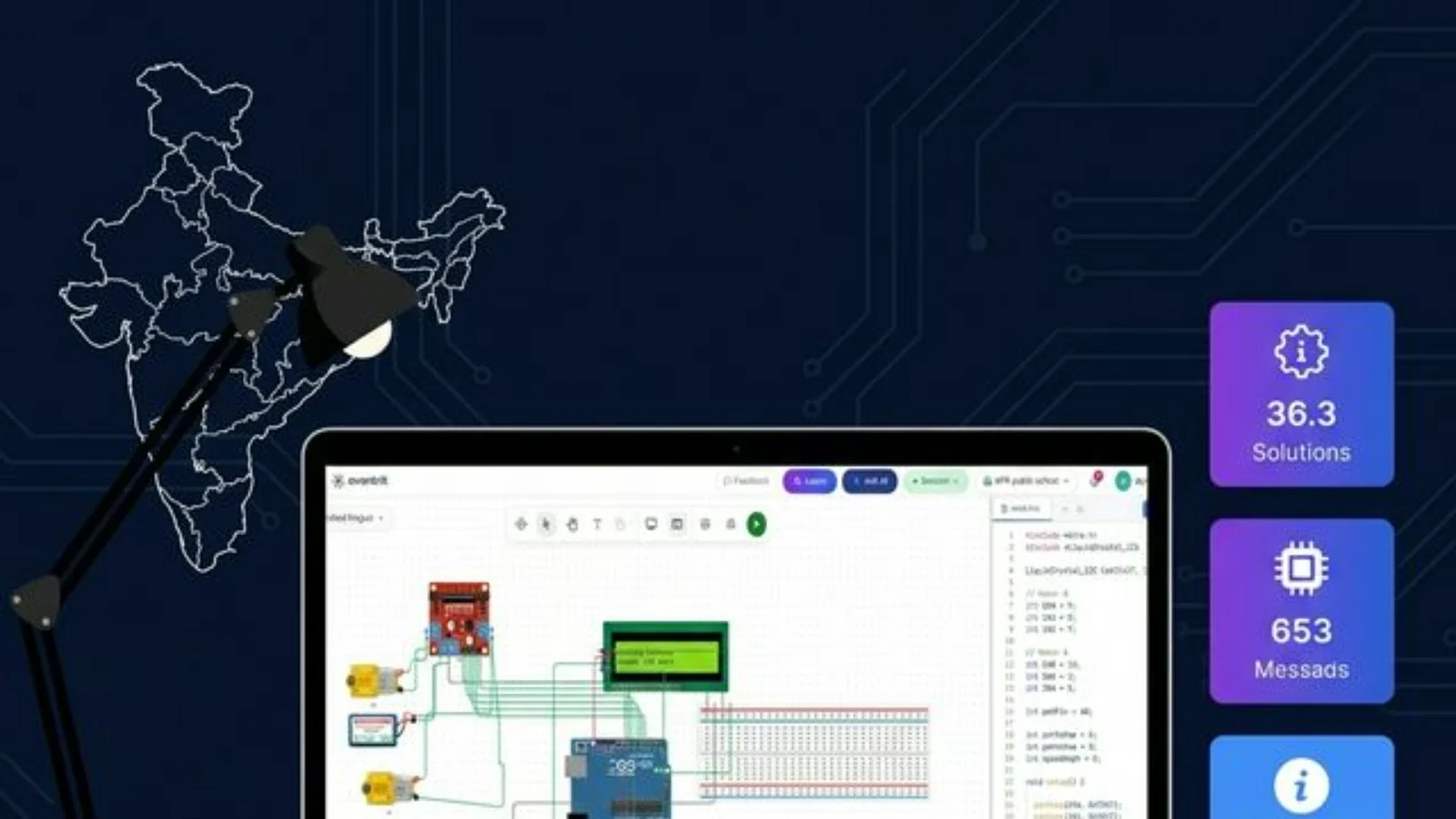
Platforms like Ayantrik Lab help students prototype ESP32-based systems virtually before hardware deployment.
Using simulation environments, developers can test:
- sensor connections
- GPIO logic
- automation workflows
- relay systems
- wireless control logic
before building the final physical circuit.
This reduces hardware debugging time and helps beginners understand embedded systems more effectively.
Which One Should You Choose?
| Use Case | Recommended Board |
|---|---|
| Learning Electronics Basics | Arduino UNO |
| Smart Home Automation | ESP32 |
| IoT Systems | ESP32 |
| Basic Robotics | Arduino UNO |
| Wireless Projects | ESP32 |
| Cloud Monitoring | ESP32 |
Conclusion
Arduino UNO remains one of the best platforms for learning basic electronics and embedded systems.
However, modern projects now require:
- wireless connectivity
- cloud integration
- faster processing
- multitasking capability
ESP32 fulfills these requirements while remaining compact and affordable.
For students and developers interested in:
- IoT
- smart automation
- wireless systems
- AI hardware
ESP32 provides significantly more capability than traditional Arduino boards.
Arduino teaches the foundation of embedded systems — while ESP32 enables modern connected electronics.